Polyphon vs. UserTesting: a panel of strangers vs. your actual users
UserTesting recruits a panel of professional testers. Polyphon interviews your actual users — recruited from your analytics, moderated by AI, synthesized into a ticket. Here's the honest comparison.
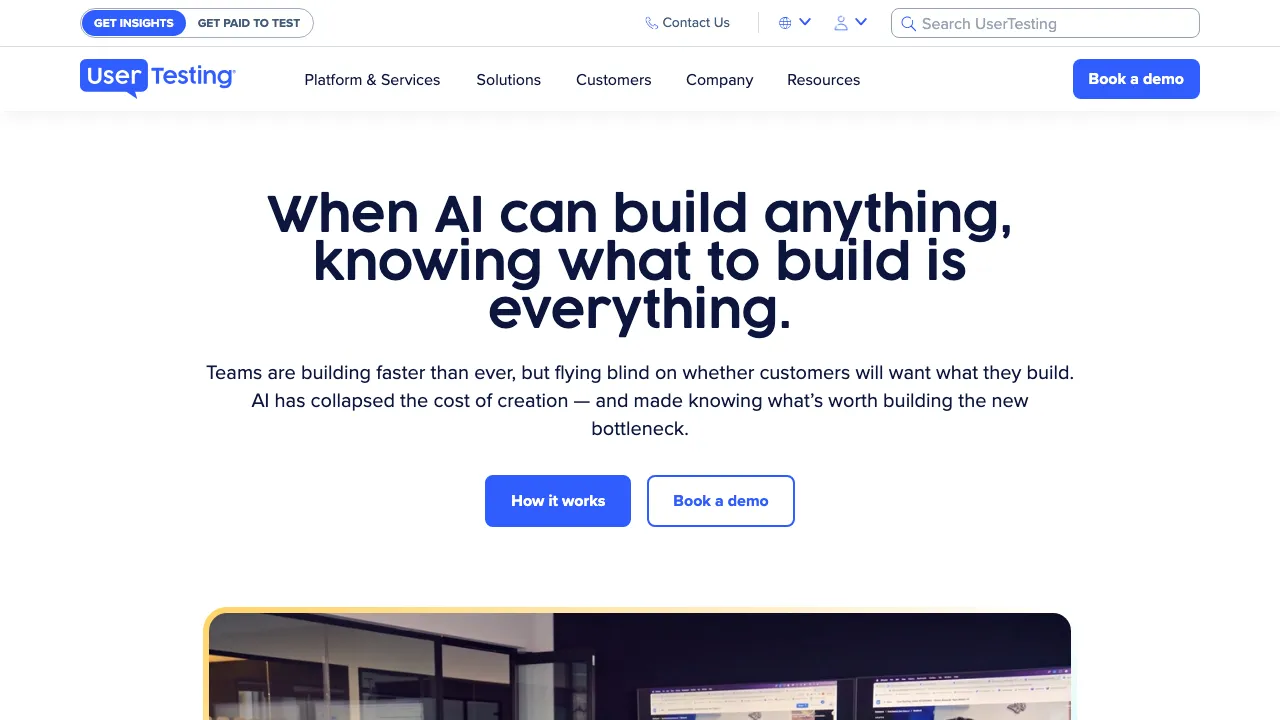
UserTesting is the default name in this category, and the product earns a lot of that. The panel is huge, the video tooling is mature, and enterprises trust it. But the people on the other end of those sessions are, by design, strangers — professional testers, not your customers. If the question keeping you up at night is *"why did my own users churn last week,"* you're aiming enterprise-grade tooling at the wrong room.
What UserTesting actually is
UserTesting is a video-first human insight platform built around its contributor network — a vetted panel of testers you can target by demographic, profession, or behavior. You write tasks, the panel records themselves completing them, and you watch the videos. For unmoderated usability testing with outside perspectives, it's genuinely the most polished thing on the market. That part is not in dispute.
The friction shows up in two places: who you're talking to, and how much process stands between you and a conversation. Buyer complaints cluster on the same themes — credits that expire before you use them, seats and study commitments to negotiate, a sales cycle to clear — and the kicker: a panel of professional testers is the one audience that can't tell you why your own users left.
The Stranger Panel Problem
A professional tester can tell you your onboarding is confusing. They cannot tell you why they stopped paying you in March, because they never paid you. They have no workflow built around your product, no team that depends on it, no budget meeting where they defended the line item. Panel feedback is usability feedback. It is structurally incapable of being *customer* feedback.
And startups mostly need the second kind. Why did activation drop after the last release? What almost stopped the last ten signups? What does the power-user cohort want next? Every one of those questions has the same answer: go talk to the people in your own database. UserTesting's panel — its core asset — is the one thing that can't help.
What you're actually comparing
| UserTesting | Polyphon | |
|---|---|---|
| Who you interview | Professional tester panel | Your actual users, by cohort |
| Recruiting | Panel matching | Auto-synced from Mixpanel/PostHog/CSV |
| Outreach & scheduling | n/a for panel; manual for own users | Automated email + instant link, no scheduling |
| Moderation | Unmoderated tasks or human-led sessions | AI voice agent, 15-minute conversations |
| Synthesis | You watch videos; AI summaries as add-on | Cross-interview themes with cited quotes |
| Where insights land | Dashboard & clips | Linear/Jira tickets + daily Slack digest |
| Contract | Annual, sales-led, seat commitments | Monthly, self-serve, cancel anytime |
Strip it down and the difference is stark: UserTesting hands you a panel you don't need if your question is about your own customers — and it still leaves the recruiting, scheduling, moderation, and synthesis of own-user research sitting on your team's calendar. Polyphon does that whole part for you, and points it at the users who actually pay you.
Where UserTesting is the right call
- You're entering a market where you have no users yet and need outside perspectives fast.
- You need usability feedback from a specific demographic your product hasn't reached.
- You're an enterprise with a research team that will actually use the seats, the credits, and the video repository.
Where Polyphon is different
Polyphon doesn't have a panel, on purpose. It plugs into the user base you already have: connect Mixpanel or PostHog (or drop a CSV), pick a cohort — churned last 30 days, hit the paywall twice, finished onboarding — and set a research goal in plain English. Polyphon writes the outreach, sends it from your own mailbox, runs 15-minute AI voice interviews the moment a user clicks, and synthesizes themes across every conversation. The output isn't a folder of videos to watch. It's a prioritized ticket in Linear or Jira and a digest in Slack, with quotes cited back to the recording.
Frequently asked questions
Can't I just recruit my own users through UserTesting?
You can, via their own-network features — but the panel is the core of the product, and you still handle the outreach, incentives, and scheduling yourself. You'd be adopting a panel platform specifically to avoid using its panel.
Is an AI voice interview as good as a moderated session?
For discovery questions — churn, activation, what nearly stopped them — an AI agent that probes follow-ups gets candid answers, partly because there's no social pressure. For deep usability observation of a prototype, a human-moderated or panel session still has a place. Different jobs.
What does switching actually look like?
There's nothing to migrate. Connect your analytics or upload a CSV, approve the generated outreach and script, and the first interviews typically run the same week.
Stop guessing. Start knowing.
Polyphon interviews your real users, synthesizes the patterns, and files the ticket — automatically. The fastest way to see it is on your own users. Book a 15-minute call and we'll set up your first research goal live.
Book a callKeep reading
Polyphon vs. Dovetail: a beautiful library with no books
Dovetail organizes research you've already done. It doesn't recruit, interview, or collect anything. Polyphon runs the research itself — and ships the synthesis to Linear and Slack.
Polyphon vs. Maze: "does my design work" is not "why did they leave"
Maze validates designs before you ship. Polyphon finds out why users churn after you ship. Two different questions — and most teams only have bandwidth to answer one well.
Polyphon vs. User Interviews: recruiting was never the whole job
User Interviews gets participants onto your calendar. Then you moderate, transcribe, and synthesize every one of them. Polyphon automates the entire pipeline — from cohort to ticket.