Polyphon vs. Perspective AI: the interview is the easy part
Perspective AI runs excellent AI-moderated conversations. But who finds the participants, and who turns transcripts into sprint tickets? Comparing the two ends of the pipeline.
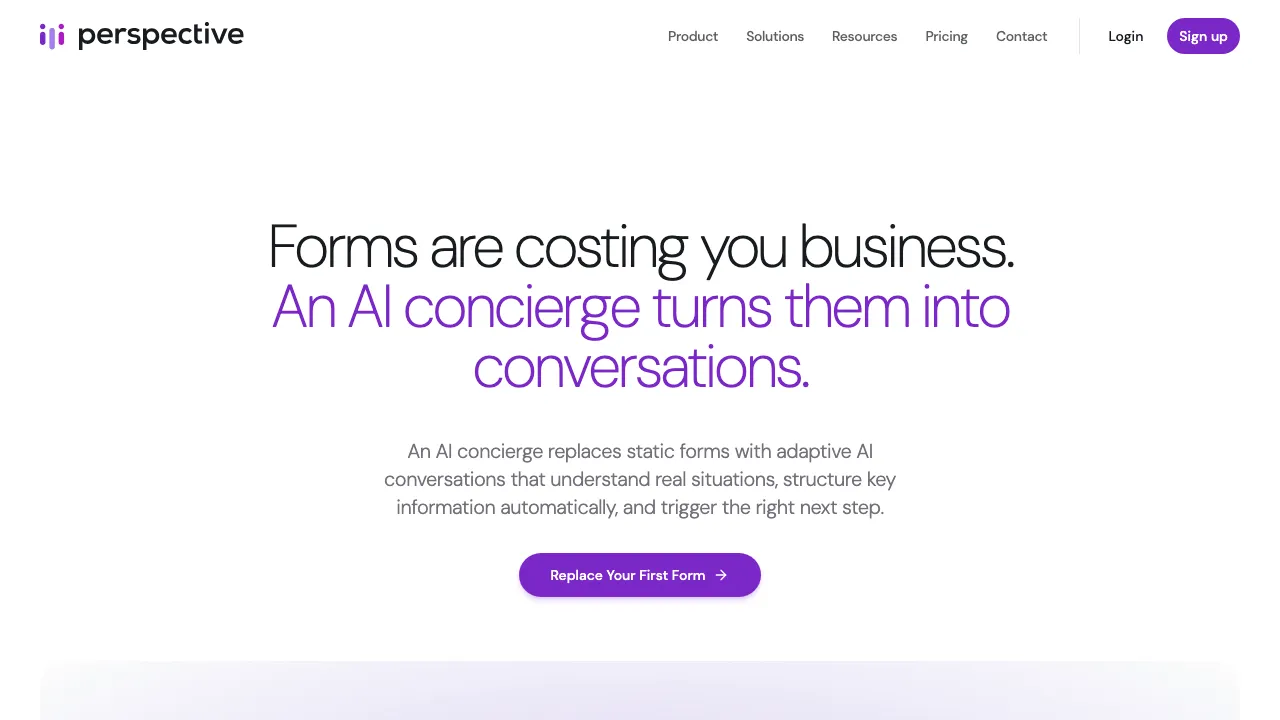
Of everything in this series, Perspective AI is the comparison we respect most — because it starts from the same belief we do: surveys flatten people, and AI-moderated conversation finally gives you qualitative depth at quantitative scale. The conversations it runs are genuinely good. The difference is everything wrapped around the conversation. An interview doesn't recruit itself, and a transcript doesn't file its own ticket. The interview is the easy part now. The pipeline is the product.
What Perspective AI actually is
Perspective AI is a conversational intelligence platform: you craft a conversation guide, share a link, and an AI moderator runs adaptive chat-based interviews — probing, following up, available in any language at any hour. It synthesizes findings into themes and summaries. It's self-serve, and the philosophy — "depth of real conversation at survey sample sizes" — is one we'd co-sign without edits.
Notice what's missing from that description, though: nothing about *who* takes the interview or *how they got there*. You bring the audience. You distribute the links — embedded in your emails, your intercepts, your follow-ups. And when the synthesis is done, it lives in Perspective's dashboard until someone on your team carries it into the tools where decisions happen.
The Last-Mile Problem (on both ends)
Every research tool has to solve three problems: get the right people in (recruiting), have a good conversation (moderation), and change what the team builds (delivery). AI has commoditized the middle one — a dozen tools now run decent AI interviews. The first and last miles are where research actually dies at startups. Nobody pulls the churned-cohort list this sprint; the findings deck nobody opens. A great conversation engine with manual recruiting and manual delivery is a great engine bolted to a car with no wheels.
The comparison
| Perspective AI | Polyphon | |
|---|---|---|
| AI-moderated interviews | Yes — adaptive, chat-first | Yes — 15-min voice conversations |
| Recruiting | You bring participants & distribute links | Auto-synced cohorts from Mixpanel/PostHog/CSV |
| Outreach | Manual — your email tools | Automated from your own mailbox, with nudges |
| Behavioral targeting | Whoever clicks your link | Churned, stalled, power users — by cohort |
| Synthesis | Themes & summaries in dashboard | Cross-interview patterns with cited quotes |
| Delivery | Dashboard; you carry it to the team | Linear/Jira tickets + daily Slack digest |
| Voice | Chat-first experience | Voice-first — tone, hesitation, emotion |
| Built for | Teams that already have distribution | Teams that need the whole pipeline |
Why voice, specifically
Chat interviews are typed answers — considered, edited, shortened. Fifteen minutes of voice is a different instrument: people ramble toward the truth, and the hesitation before "...yeah, the setup was fine" is data no text box captures. Polyphon's agent listens for thin answers and emotional cues and probes them in the moment, then the synthesis quotes users in their own recorded words — which lands very differently in a roadmap debate than a paraphrase.
Where Perspective AI is the right call
- You already have distribution — a newsletter, an intercept, a community — and just need the conversation layer.
- You want low-commitment experimentation before you invest in a full pipeline.
- Your respondents prefer typing — sensitive topics, accessibility needs, or contexts where speaking aloud is awkward.
Where Polyphon is different
Polyphon owns both last miles. Recruiting: connect your analytics, define the cohort, and outreach goes out automatically from your own mailbox the moment users match — churned yesterday, interviewed today. Delivery: synthesis doesn't wait in a dashboard; it arrives as a prioritized Linear or Jira ticket and a Slack digest with the morning coffee. The conversation in the middle is voice, moderated by an agent tuned to your research goal. One platform, the whole pipeline, zero hours of your team's week.
Frequently asked questions
Aren't Polyphon and Perspective AI direct competitors?
We overlap on the AI-moderated conversation. We diverge on scope: Polyphon automates recruiting from your analytics and delivery into your sprint tools, which Perspective leaves to you. Teams with their own distribution may be happy with the conversation layer alone.
Is voice always better than chat?
No — chat wins for sensitive topics and some accessibility contexts. Voice wins for candor, nuance, and emotional signal on discovery questions like churn and what nearly made them leave, which is where Polyphon aims.
Can Polyphon interview people outside my user base?
Polyphon is built around your own users — that's where the analytics integration and outreach automation shine. For panels of strangers, pair it with a recruiting tool.
Stop guessing. Start knowing.
Polyphon interviews your real users, synthesizes the patterns, and files the ticket — automatically. The fastest way to see it is on your own users. Book a 15-minute call and we'll set up your first research goal live.
Book a callKeep reading
Polyphon vs. UserTesting: a panel of strangers vs. your actual users
UserTesting recruits a panel of professional testers. Polyphon interviews your actual users — recruited from your analytics, moderated by AI, synthesized into a ticket. Here's the honest comparison.
Polyphon vs. Dovetail: a beautiful library with no books
Dovetail organizes research you've already done. It doesn't recruit, interview, or collect anything. Polyphon runs the research itself — and ships the synthesis to Linear and Slack.
Polyphon vs. Maze: "does my design work" is not "why did they leave"
Maze validates designs before you ship. Polyphon finds out why users churn after you ship. Two different questions — and most teams only have bandwidth to answer one well.